WONDERS KNOWLEDGE

Games

Find Us on Facebook

Recent Post

Showing posts with label LIFE & STYLE. Show all posts

Saturday, 2 August 2014

10 Most Amazing Facts About Dreams


We all have different types of dreams; sometimes weird, sometimes horrible and sometime dreams, that leave us extremely puzzled. Dream is a very difficult-to-understand and a vast phenomenon and requires a lot of deep studies to understand it. I was searching about the dreams the other day and I came across some interesting facts about dreams. I have shortlisted ten best and most amazing facts. Keep reading after the break.

10. We Fail to Remember 90% of our Dreams:


10.-We-Fail-to-Remember-90-percent-of-our-Dreams
We all have dreams and it is quite rare that we completely remember any dream. The moment we wake up, we start losing the memory of the vision we just had while sleeping. According to some researches, we tend to forget about half of the dream within 5 minutes of waking up. 90 percent of it is gone after 10 minutes.

9. Dreams Effect Everyone Differently:

9.-Dreams-Effect-Everyone-Differently

Everybody dreams; however dreams differ from person to person. The reaction of an individual to a dream also differs for everyone. Men have one type of dreams while women have a totally different type. Men usually dream more about other men and women dream about men and other women, equally. Both genders experience dreams that have physical reactions related to sexuality; men have erection while it causes an increased flow of vaginal fluids in women.

8. Dreams Are Not A Fabrication Of Our Brain:

8.-Dreams-Are-Not-A-Fabrication-Of-Our-Brain

We all have dreams in which we see places, not known to us; people who are total strangers. Well! The amazing thing is that none of those places and/or people are fabricated; they are all real. We see millions of people in our life but we don’t know many of them. We forget some and when those faces appear in our dreams, they all leave us in a baffled state of mind. Anything or anyone you see, is recorded in your subconscious and we live in our conscious state. So our brains has an almost infinite supply of characters that are extracted from our subconscious and are made in to dreams.


7. Not All Dreams Are Colorful:


7.-No-All-Dreams-Are-Colorful
A strong percentage of people (12%) dream in black and white where as a the rest have fully colorful dreams. There are few types of dreams that are common to almost everyone. They include car accidents, getting late for an exam, falling from a place too high, running on the spot, witnessing the death of person who is presently alive and being chased by someone or something etc.


6. Dreams Are Twisted:


6.-Dreams-Are-Twisted
Dreams are a language of omens and whatever you see is not necessarily what it actually means. Our subconscious tries relating things to the reality, using signs and examples. It is very rare that your dream actually is about what you see in it. Usually, dreams have a deeper interpretation.


5. Quitters Have Vibrant Dreams:


5.-Quitters-Have-Vibrant-Dreams
The journal of Abnormal psychology states, “Among 293 smokers abstinent for between 1 and 4 weeks, 33% reported having at least 1 dream about smoking. In most dreams, subjects caught themselves smoking and felt strong negative emotions, such as panic and guilt. Dreams about smoking were the result of tobacco withdrawal, as 97% of subjects did not have them while smoking, and their occurrence was significantly related to the duration of abstinence. They were rated as more vivid than the usual dreams and were as common as most major tobacco withdrawal symptoms.”


4. Blind People Have Equally Vivid Dreams:


4.-Blind-People-Have-Equally-Vivid-Dreams
It is strange and amazing too, but blind people have equally vivid dreams as the ones who are not blind. People who are blind by birth don’t see any depiction in their dreams but their are sense like touching, smell, sound and taste etc are completely involved. However, those who are not blind by birth but have lost their eye sight as a result of an accident or so, do see images and proper depiction in their dreams.

3. While Sleeping, You Are Half Dead:


3.-While-Sleeping-You-Are-Half-Dead
This may seem something “out-of-the-world” but it is a fact that your are technically ‘dead’ for half of the time you sleep. According to researches, our soul enters and leaves our body thousands of times per second and this movement is free from the bounds of time and space. So, as I earlier said we are technically dead half of the time while we are sleeping.


2. What We Physically Feel Is Incorporated In Our Dreams:


2.-What-We-Physically-Feel-Is-Incorporated-In-Our-Dreams
We have this experience quite often that a physical feeling from the real world is incorporated in our dreams. The most common example is that sometimes when you are actually thirsty, you feel thirst in your dream. Another more common example is when you have a horrible nightmare and wake up, you are actually sweating and/or shivering.


1. We Are Paralyzed While We Sleep:


1.-We-Are-Paralyzed-While-We-Sleep
This is a hard-to-believe fact as you may think that we keep shifting our position while we sleep so how can we be paralysed? An article at Wikipedia explains it and mentions that, Glands begin to secrete a hormone that helps induce sleep and neurons send signals to the spinal cord which cause the body to relax and later become essentially paralysed.


Read more ...

Thursday, 17 July 2014

Time Pass Games to Play at Home


Remember those fun, informal games that parents and kids have enjoyed for age bracket when there were no batteries or tools required. They’re ideal this time of year when you’re trapped waiting on a long line or fixed in holiday traffic. Playing family games with your family is a good way to spend quality time as well as have fun. They help boost language, memory and other learning skills. When you have a family of all ages what are the games that you can play that will engage the oldest and the youngest, the eager and the not so eager? This spread of ages means that the games that we play have to cater for all needs and capabilities. Beneath are just a few of the games that we love to play. There are many family games and every entertaining activity makes for a different mood. Here we have top 10 home games ideas for the family which provide you fun and entertainment by playing them.


10. Carrom:


carrom board

It is enlisted as tenth best family games. Carrom is a “strike and pocket” table game of Eastern source comparable to table shuffleboard and billiards. It is very well-liked in Nepal, India, Pakistan, Bangladesh, Sri Lanka and neighboring areas. Carrom is very frequently played within families, including the children, and at other public gatherings. Different principles and regulations exist in different regions. In this sport at least 2 and at most 4 players can play. There are four corner pockets. The plan of this game is to pocket 9 lighter entity disks and the queen before your contestant. The aim of it is to use a striker disk with a flick of the finger to progress the lighter entity disks into the pockets, which is on every corner of the board. Fine-grained powder is used on the board to enable the pieces to slide easily.

9. Monopoly:


family games

Another very exciting game named as monopoly. It is the worth for home sportrs ideas for the family. Monopoly is a board game created from America and initially in print by Parker Brothers. Players move about the game board trading and do business, increasing properties with houses and hotels, and collecting rents from their challengers, the aim is to prove your contestant ruined. In some editions 2 to 6 players can play and in other 2 to 8 players can play or you can play in pairs. It comprises of forty spaces containing 28 properties, 3 chance spaces, 3 service chest spaces, a comfort tax space, an income tax space, and the four corner squares. It is famed all over the world and come under one of the preferred games among families. Each age group love to play it but a child should be more than 8 years at least to know this game.

 8. Chinese Checkers:


top family games

Chinese Checkers is a tactical board game in which at least 2 and at most 6 players can play or one can play in with buddies too. This game board is of hexagon figure in which one has to chase to make all the marble go across the hexagon fashioned board “Home” like the corner of the star opposite one’s starting corner by using step moves or leaped over other pieces. No as per game’s name suggested, this game is not invented by china. The source of this game is exposed from Germany by “Stern- Halma”. The name Chinese checker is created from United States. The regulations are very simple to comprehend so every age group people love to play it.

7. UNO:


uno game

UNO is an American card game which is played with particularly in print deck. These cards seem like normal cards but the way of playing them is entirely different. The most vital approach used in it is saving vital cards for later, knowing when to put them down and hide your hand. It is initially created in 1971 by Merle Robbins. Merle came up with the plan and began this game to his family when his family players loved the scheme and started playing it than he made it a confined trade and sold it. In the deck, there are 112 cards, in which there are 26 of each color like green, red, blue and yellow.

 6. Chess:


top family games


Chess is a tactic board game admired in all over the world. It is played international in homes, parks, schools, clubs, online and so on.  It is so trendy that many global tournaments take place in all over the planet and requests the champions to come and play. It is played on chessboard with 64 squares set in eight by eight grids. The colors of squares are rotate and are referred to as light and dark squares. Every player has 16 Pieces including king, queen, rooks, knights, bishops and pawns. Each piece has unlike moves. The pieces are used to bother the opponent region with an aim of ‘Checkmate’ the challenger king by placing an unavoidable danger of capture. Opening, middle game and endgame are the three phases of it.

 5. Quiz Games:


best family games

Quiz Games are one of the best selections to play with family as it will get you in full aggressive temper and will expand the fun to intense. Quiz game is a brain sport in which people require to answer the questions which is asked. Players barely matters in it. You can play alone as well as with buddies. Quiz games can be played for current affairs, commerce quiz, sport quiz, history quiz and movie quiz etc. The topic of quiz games could be selected according to player’s interest. It not only boost the fun but also increases the knowledge. Quiz games are played all over the place and in every event only the types of question changes. It will be great fun to play a quiz game with family to spend a good value time.

4. Treasure Hunt:


games play at home

Treasure Hunt is a game in which one or more players try to find secret articles, locations by using a sequence of hints. Treasure hunt is a game in which you will not only pursue for treasure you will get pleasure and value time with your family along with it. Treasure hunt may be an inside or outside doings. Children love to play treasure hunt as it is a game in which children play as a group not alone which boosts their fun. Treasure hunt clues can be solving of puzzles or riddles according to player’s cleverness height.

 3. Card Games:


cards family game

Cards are one of those fun games which can be played with family and is ranked 3rd in list of Top Family Games. There are many kinds of card games offered for people to play and have fun consequently. Examples of card games are Go boom, Spoons, I doubt it, Go fish and crazy fights and so on. Each game has its own regulations and number of players also changes accordingly. It will be immense fun to play card games with family. And if you are not contented with real policies, you can make your own and start the fun at your home.

 2. Scrabble:


list of family games

Scrabble is also a word game and very well-known across the world. It not only boosts the fun but also the information about words. It is a good standard to make children locate spelling in it. Two to four players can play in it by placing tiles, each bearing a single letter on game board which is divided into 15×15 network of squares. The tiles must shape a form and the word should be in standard dictionary. The game is put up for sale in 121 countries and in 29 languages. The name Scrabble is a brand of Hasbro, Inc in United States and Canada. Each year a lot of tournaments also take place like World Scrabble Championship, UK open and so on. This game is completely fun with family and good basis to boost vocabulary.

 1. Bingo (Housie):


which is best family game

Which is the most famous family game to play at home?
Bingo is the top ranked game in the list of Top Family Games. Bingo is a game of possibility in which the players indicate the numbers in print on tickets or cards as the numbers are drawn arbitrarily by a caller, the winner would be the person who will get all numbers marked on his/her card and after that the person have to say “Bingo” audibly so that everyone can hear or else there would be no use. The Bingo has become so well-known across UK that lobbies were opened intentionally to play it. This game is created from Italy in the 1500s and drifted to France, Greece, Great Britain and other areas of Europe in the 1700s. At least there should be 3 players at most there is no limit as many players would be their fun will also be enlarged.


Read more ...

Sunday, 13 July 2014

Health Benefits of Fasting

Today we discuses some incredible health benefits of fasting. What is fasting? Fasting is primarily an act of willing abstention from all food, drink, or both, for a period of time. In Islam, fasting for a month is an obligatory practice during the holy month of Ramadan, from fajr (dawn), until Maghreb (sunset). Muslims are prohibited from eating, drinking (including water), and engaging in sexual activity. They are also encouraged to temper negative emotions such as anger and addiction. Fasting in the month of Ramadan is one of the Pillars of Islam, and thus one of the most important acts of Islamic worship.
Fasting is not only a religious obligation but it has many health benefits. Fasting is a good practice, if properly implemented. It promotes elimination of toxins from the body, reduces blood sugar ans fat stores. It promote healthy eating habits and boost immunity. Research suggests there are major health benefits of fasting to caloric restriction. Benefits include reduced risks of cancer, cardiovascular diseases, diabetes, insulin resistance, immune disorders, and more generally, the slowing of the ageing process, and the potential to increase maximum life span. Here are top 10 health benefits you can derive from fasting.

Health Benefits of Fasting

10 Incredible Health Benefits of Fasting:


1. Fasting Promotes Detoxification
The act of fasting promotes detoxification, since fat is burned and toxins are released. As the body breaks down its fat reserves, it mobilizes and eliminates stored toxins.
2. Fasting Improves Insulin Sensitivity
Fasting improves insulin sensitivity (which is a very big deal). When your cells are tickled by the effects of insulin, they do a much better job modulating your blood sugar levels after meals and this makes life a lot easier for your poor old pancreas.
3. Fasting Rests Digestive System
During fasting, the digestive organs rest. Fasting gives the digestive system a much-needed rest. After fasting, both digestion and elimination are invigorated.
4. Fasting Boosts Immunity
Fasting boosts immunity if one is careful not to break their fast with an abnormally excessive amount of food. Fruits contain vitamins A and E which boost immunity so one should take care of their balanced diet in between fasts if this is to take place. Fruits should be eaten a lot while breaking the fast.
5. Fasting Corrects High Blood Pressure
Fasting corrects high blood pressure without drugs. Fasting will normalize blood pressure in the vast majority of cases, the blood pressure will remain low after the fast, if the person follows a health-supporting diet and lifestyle.
6. Fasting May Help to Overcome Addictions
Fasting makes it easy to overcome bad habits and addictions. Many people have overcome tobacco and alcohol addictions by fasting, and even drug addictions. Fasting rapidly dissipates the craving for nicotine, alcohol, caffeine and other drugs.
7. Fasting Promotes Weight Loss
Fasting initiates rapid weight loss with little or no hunger. It reduces the store of fats in the body. However fasting is not a good weight loss strategy. Reducing fat and sugar intake, and increasing fruits and rest are better measures to achieve weight reduction.
8. Fasting Resolves Inflammatory Response
Some studies show that fasting triggers resolution of inflammatory diseases and allergies, examples of such being arthritis and skin diseases such as psoriasis. Some experts even suggest that fasting could magically heal the inflammatory bowel diseases such as ulcerative colitis.
9. Fasting Promotes Healthy Diet
Fasting is the perfect gateway to a healthful diet and lifestyle. Going on a fast gives you the motivation and enthusiasm to make a fresh start. It has been observed that fasting reduces craving for processed foods. It promotes desire for natural foods, especially water and fruits.
10. Fasting Clears the Skin and Whitens the Eyes
Fasting clears the skin and whitens the eyes. It is common to see skin eruptions clear while fasting, and the whites of the eyes never look so clear and bright as they do after fasting.
Read more ...

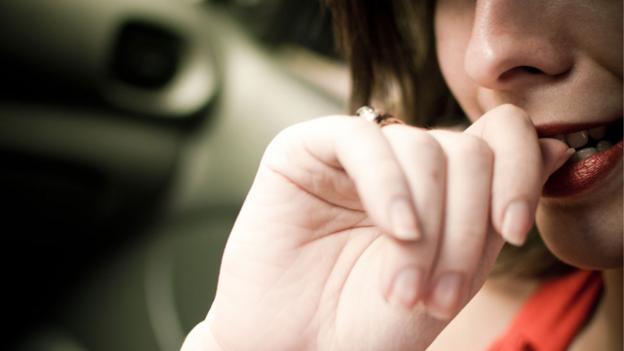
Why do we bite our nails?

(Freddie Peña/Flickr/CC BY 2.0)
It can ruin the appearance of your hands, could be unhygienic and can hurt if you take it too far. So why do people do it? Biter Tom Stafford investigates
What do ex-British prime minster Gordon Brown, Jackie Onassis, Britney Spears and I all have in common? We all are (or were) nail biters.
It's not a habit I'm proud of. It's pretty disgusting for other people to watch, ruins the appearance of my hands, is probably unhygienic and sometimes hurts if I take it too far. I've tried to quit many times, but have never managed to keep it up.
Lately I've been wondering what makes someone an inveterate nail-biter like me. Are we weaker willed? More neurotic? Hungrier? Perhaps, somewhere in the annals of psychological research there could be an answer to my question, and maybe even hints about how to cure myself of this unsavoury habit.
My first dip into the literature shows up the medical name for excessive nail biting: 'onychophagia'. Psychiatrists classify it as an impulse control problem, alongside things like obsessive compulsive disorder. But this is for extreme cases, where psychiatric help is beneficial, as with other excessive grooming habits like skin picking or hair pulling. I'm not at that stage, falling instead among the majority of nail biters who carry on the habit without serious side effects. Up to 45% of teenagers bite their nails, for example; teenagers may be a handful but you wouldn't argue that nearly half of them need medical intervention. I want to understand the 'subclinical' side of the phenomenon – nail biting that isn't a major problem, but still enough of an issue for me to want to be rid of it.
It’s mother’s fault
Psychotherapists have had some theories about nail biting, of course. Sigmund Freud blamed it on arrested psycho-sexual development, at the oral stage (of course). Typical to Freudian theories, oral fixation is linked to myriad causes, such as under-feeding or over-feeding, breast-feeding too long, or problematic relationship with your mother. It also has a grab-bag of resulting symptoms: nail biting, of course, but also a sarcastic personality, smoking, alcoholism and love of oral sex. Other therapists have suggested nail-biting may be due to inward hostility – it is a form of self-mutilation after all – or nervous anxiety.

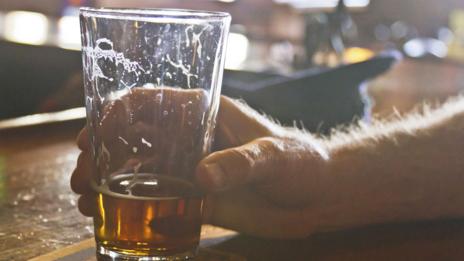
Some have argued that nail biters are more likely to be alcoholic, but actual evidence is thin (Thinkstock)

Like most psychodynamic theories these explanations could be true, but there's no particular reason to believe they should be true. Most importantly for me, they don't have any strong suggestions on how to cure myself of the habit. I've kind of missed the boat as far as extent of breast-feeding goes, and I bite my nails even when I'm at my most relaxed, so there doesn't seem to be an easy fix there either. Needless to say, there's no evidence that treatments based on these theories have any special success.
Unfortunately, after these speculations, the trail goes cold. A search of a scientific literature reveals only a handful of studies on treatment of nail-biting. One reports that any treatment which made people more aware of the habit seemed to help, but beyond that there is little evidence to report on the habit. Indeed, several of the few articles on nail-biting open by commenting on the surprising lack of literature on the topic.
Creature of habit
Given this lack of prior scientific treatment, I feel free to speculate for myself. So, here is my theory on why people bite their nails, and how to treat it.
Let's call it the ‘anti-theory’ theory. I propose that there is no special cause of nail biting – not breastfeeding, chronic anxiety or a lack of motherly love. The advantage of this move is that we don't need to find a particular connection between me, Gordon, Jackie and Britney. Rather, I suggest, nail biting is just the result of a number of factors which – due to random variation – combine in some people to create a bad habit.
First off, there is the fact that putting your fingers in your mouth is an easy thing to do. It is one of the basic functions for feeding and grooming, and so it is controlled by some pretty fundamental brain circuitry, meaning it can quickly develop into an automatic reaction. Added to this, there is a ‘tidying up’ element to nail biting – keeping them short – which means in the short term at least it can be pleasurable, even if the bigger picture is that you end up tearing your fingers to shreds. This reward element, combined with the ease with which the behaviour can be carried out, means that it is easy for a habit to develop; apart from touching yourself in the genitals it is hard to think of a more immediate way to give yourself a small moment of pleasure, and biting your nails has the advantage of being OK at school. Once established, the habit can become routine – there are many situations in everyone's daily life where you have both your hands and your mouth available to use.

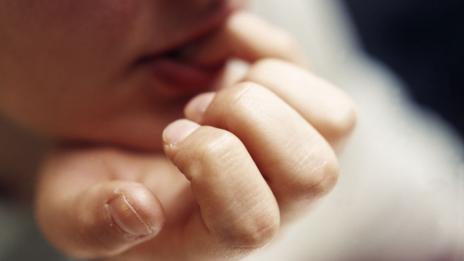
Does nail biting have a simple explanation? (SPL)

Understanding nail-biting as a habit has a bleak message for a cure, unfortunately, since we know how hard bad habits can be to break. Most people, at least once per day, will lose concentration on not biting their nails.
Nail-biting, in my view, isn't some revealing personality characteristic, nor a maladaptive echo of some useful evolutionary behaviour. It is the product of the shape of our bodies, how hand-to-mouth behaviour is built into (and rewarded in) our brains and the psychology of habit.
And, yes, I did bite my nails while writing this column. Sometimes even a good theory doesn't help.
Read more ...

Half Of The World's Population Lives In These 6 Countries

The world population has reached 7.2 billion, according to data from the United Nations, which celebrates World Population Day today, July 11. The numbers rose from just 2.5 billion in 1950. 
But half of those 7.2 billion people live in only six countries: the United States, Brazil, Pakistan, India, China, and Indonesia, shown above on the map from the Pew Research Center.
China has the world's largest population — 1.36 billion people. Next comes India with 1.28 billion people. The U.S., Brazil, Pakistan, and India combined house about 702 million people.
The U.N. set the theme this year as "investing in young people." Today's 1.8 billion young people will continue to shape the social and economic status of countries. 
"On this World Population Day, I call on all with influence to prioritize youth in development plans, strengthen partnerships with youth-led organizations, and involve young people in all decisions that affect them. By empowering today’s youth, we will lay the groundwork for a more sustainable future for generations to come," U.N. Secretary-General Ban Ki-moon said.


Read more ...

4 Tips For Exercising Safely In The Heat

man tired exercise running


Summer is an exciting time. No matter what you’re into, there’s probably more of it to do in the summer. From festivals and outdoor concerts to camping and swimming, many people take to the great outdoors this time of year. 

For avid exercisers, summertime often means a chance to get out of the gym and get those workouts in while enjoying a scenic view, a little fresh air and that summer heat. Too much of a good thing can spoil your good time, though, so it’s a good idea to stay heat-savvy as you enjoy the hottest months of the year.

Dangers of Heat


When it comes to heat-related illnesses, conditions are generally categorized by severity, with heat stroke – a condition where the body’s core temperature reaches 104 degrees or more – being the most severe. Early symptoms include nausea, vomiting, dizziness and confusion. If you have these symptoms while in the heat, you should seek medical attention.

Death due to heat stroke, or hyperthermia, is rare in America. Heat stroke accounts for about 660 deaths per year in the U.S., according to a 2009 Centers for Disease Control and Prevention report. However, all these deaths are preventable, and the effects of milder heat-related illnesses are no picnic, either.
Heat exhaustion is a not a life-threatening form of heat illness, and it's much more likely to develop while exercising outside in the summer. While heat stroke is due to overheating, heat exhaustion is caused by the loss of fluids and salts from heavy sweating. Symptoms are similar to heat stroke, though usually milder, and they can include cramping and heat rash, which is a prickly sensation paired with redness on the skin. Even mild heat illness symptoms can ruin your workout and your day, and they can lead to something more serious. Keep your workouts cool with these precautions:

1. Protect Yourself From the Sun and Heat


The first rule of summer health is to protect yourself from the harmful effects of sun exposure. Not only will shielding yourself from ultraviolet rays keep you pretty (80 percent of visible aging is due to sun exposure), it will also keep your skin healthy. Dermatologists recommend wearing sunscreen every day you step into the sun, and it’s a good idea to up the sun protection factor (usually abbreviated as SPF) when heading out for extended periods. Before you begin that long hike or bike ride, make sure you slather on the sunscreen, and keep reapplying according to the label.
In addition to applying sunscreen, you should also wear appropriate clothing. This means lightweight, breathable clothes that don’t restrict your perspiration. Sweating is the main way your body reduces heat, so it’s essential to let yourself sweat in the heat. Thankfully, there are plenty of moisture-wicking workout clothes that help remove sweat from your skin so you’re not uncomfortable and can keep going. Some newer products are synthetic, but natural wool and bamboo fibers are also available.
When it comes to what to wear, pay special attention to your head and feet. When these areas overheat, it’s often a signal of symptoms to come, because heat exits your body through them. Keep your head and toes cool with breathable, ventilated headwear and footwear, so any extra heat can escape quickly. For all-day activities, try a neck-cooling wrap. It's an inexpensive cloth tube filled with a gel, and after being soaked in water for a few minutes, stays cool against hot skin for hours .


2. Mind the Timing


Summer heat is most brutal at midday, so avoid heavy exertion outdoors between 10 a.m. and 6 p.m., if at all possible. That time frame may be shorter or longer, depending on your body and the climate where you live, so always err on the safe side when heading out for strenuous exercise. Some experts recommend heat acclimatization for exercise, which means gradually increasing intensity and length of outdoor workouts over 10 to 14 days. Walking outside is a great way to start. If you live somewhere with distinct seasons, it might help to do this every summer to prepare yourself for the outdoor running season.
For active people with allergies or asthma, timing gets a little more restrictive. Pollen and other allergen counts are highest in the morning and right before dusk, so the best time to hit the pavement is usually just after business hours. The exception to this rule is just after a rain shower, when particulates are cleared from the air. Heck, if you don’t mind getting wet, you can go out during a light rain, when the air is cooler and practically pollen-free.


3. Hydrate, Hydrate, Hydrate


Keeping yourself hydrated isn’t just something you should do during your summer workouts. It’s something you should do before and after workouts, and every time in between. Proper hydration not only keeps energy up and hunger in check, but it also helps ensure healthy skin and organs. Since dehydration happens most easily when you’re hot or moving, water should be a top priority if you plan on working out in the heat. Those who sweat a lot, whether from heat or exercise, also lose electrolytes that need replenishing.
Because your overall hydration needs depend on your weight, activity level, climate and health status, it’s hard to set guidelines that apply to all Americans. However, the Institute of Medicine has set up adequate intake benchmarks for men and women, which amount to 15 cups and 11 cups of water per day, respectively. When heat and activity are involved, you’ll need more, and you’ll also need more if you’re larger (by height or weight standards) than the average person.
When possible, drink at least 20 ounces of fluid two hours before exercising. If you’re an early-morning workout person, it’s important to keep yourself well hydrated the day before an early workout. During your activity, stay hydrated as well as possible by consuming another three to eight ounces every 15 minutes on average for activities lasting less than an hour. If you’re participating in an activity lasting longer than that, make sure to drink a sports drink with carbohydrates and electrolytes. After strenuous workouts, drink water until you’re not thirsty anymore, and have a small, healthy snack that contains carbohydrates, electrolytes and sugars to replenish what you’ve lost. A yummy suggestion: an eight-ounce glass of chocolate milk with a pinch of salt, for a new twist on an old favorite.

4. Know Your Limits


We're all different, and even if your limitations are greater than others', you don’t have to sit out the fun this summer. If you’re out and about for an all-day activity, make sure you rest for at least 10 minutes every hour and hit the shade during breaks if you can. For shorter workouts and in between breaks, make a habit of listening to your body. You know better than anyone else where you’re at physically, so nobody can gauge your symptoms as well as you can. For example, if you know you sweat more than most people, you’ll need to drink water more often to stay hydrated. And if you’ve just started working out, you’ll want to ease into your outdoor routine slowly.
Pain, dizziness, tingling and nausea are signs that you’re pushing too hard and should slow things down. If you’re exerting yourself outside and are feeling overtired, too hot or fatiguing faster than normal, these are all signs of heat’s effect on your body. If you get a hunch you should slow down or stop – listen to it. Heat illness and injury will throw a bigger wrench in your overall routine than quitting early one day.


Read more ...

Why Educated People Need Glasses


Revenge Of The Nerds


When most people picture a stereotypical nerd, they think of glasses and a pocket protector. Turns out there may be some truth behind that idea. New research suggests that number of years of study is more important than genetics in whether or not a person becomes nearsighted.
A study of 5,000 German residents found that individuals with more years of schooling were more likely to be nearsighted – and were more severely nearsighted – than people with less education.
The study, published online in the journal Ophthalmology, found that education level was more important than genetics in predicting whether a person would develop myopia or nearsightedness. Both words describe a vision condition where distant objects are blurry.
"We are surprised because about 50 years ago myopia was thought to be almost completely determined by genetics," said Alireza Mirshahi, an ophthalmologist and researcher at the University Medical Center Mainz in Germany. "We see that genetic factors do play a role but the role of environmental factors is much more important."
Nearsightedness usually develops during elementary and secondary school. Studies dating all the way back to the late 1800s and early 1900s have linked myopia to higher education and activities that require focus on nearby objects, such as reading or sewing. But the root cause of myopia is still a topic of speculation among scientists. 
A 2009 study found that in the United States nearsightedness had risen from 25 percent of the population to about 41 percent during the past four decades. The condition has reached almost epidemic proportions in certain East Asian countries where up to 90 percent of older schoolchildren have myopia. The rapid rise hints that lifestyle, instead of genetics, may be to blame.
The trend is concerning because eye appointments, prescription glasses and laser surgery cost time and money for affected individuals.
In the study, the researchers analyzed data from the Gutenberg Health Study, a large-scale research project looking at different aspects of health in German citizens, aged 35 to 74. Any participant who had not undergone corrective vision surgery received an eye exam and then the results were compared based on age, sex and education level.
The German school system provides a unique opportunity to look at education and nearsightedness. Students pursuing a trade can attend school for nine or 10 years, while students heading to university stay for 13. Researchers found that each additional year of schooling increased the person’s risk of being nearsighted. Of adults who completed nine years of school, about 27 percent were nearsighted, compared to about 41 percent of adults who finished 10 years. Fifty percent of participants who graduated after 13 years had the condition.
Not only were adults with more education more likely to be myopic, but, on average, they were more severely myopic than adults with less schooling.
But Mirshahi stresses that the study does not necessarily say that education is what warps the eyes. It can only find associations between length of schooling and nearsightedness.
"It doesn’t mean that someone who is not myopic is bad at school," he said.
"I think it’s very interesting," said Nina Jacobsen, an ophthalmologist and researcher at Glostrup University Hospital in Copenhagen, Denmark. "It confirms the knowledge of what other studies have shown that there is this relationship between the length of education and the development -- and also to some degree the level -- of myopia."
In about 3,600 of the participants, researchers also looked at whether or not they carried certain gene types related to myopia. But compared to the number of years spent in school, a person’s genes had only a small effect on vision.  
The authors noted that they could not measure how much time each person spent outside. Some previous research suggests that outdoor exercise appears to protect the eyes from becoming nearsighted.
"Several studies around the world have shown that we are getting more and more myopic," said Mirshahi. "At the same time we are doing more and more near work. So it means spending more time reading, or looking at a computer or at a laptop or a smartphone may or probably will increase the chance of getting more nearsighted."
But not all scientists agree that our smartphones will skew our vision.
"The jury is really out on exactly what kinds of near work would put you higher risk than others," said Susan Vitale, an epidemiologist at the National Eye Institute in Bethesda, Maryland. "But I think almost everybody agrees that it would be good for kids to spend more time outside."
In future research, Mirshahi aims to test the connection between intelligence and nearsightedness. An earlier study conducted by Jacobsen found that myopic young men scored better on IQ tests than men with normal vision. The next study may show whether smart people just happen to be more nearsighted, or whether smart people are more likely to spend more time studying, which may lead to a prescription for glasses.
Though the glasses stereotype might hold true, there's still no word yet on whether more education increases the chances of wearing a pocket protector.


Read more ...
Designed By